Work that nobody usually sees
Behind many photos from the hollows there are climbs into the crown, hours of documentation and data we have been collecting since 2017.
Safely up to the hollow
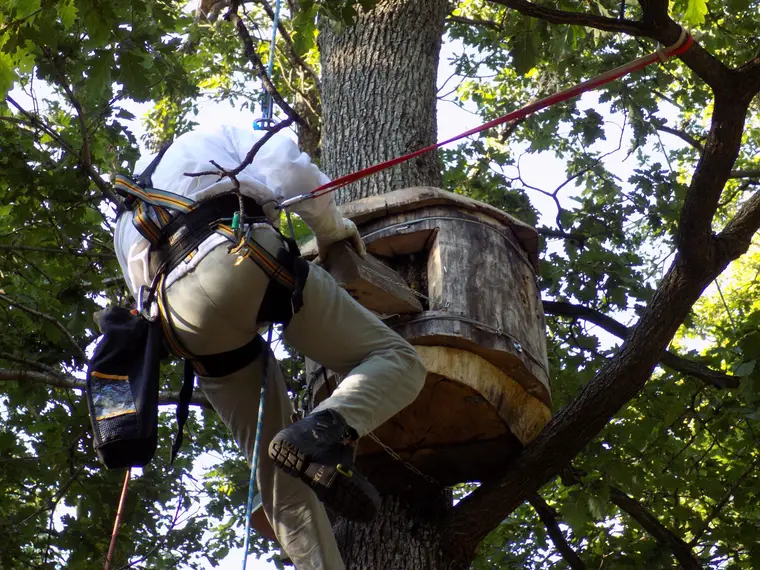
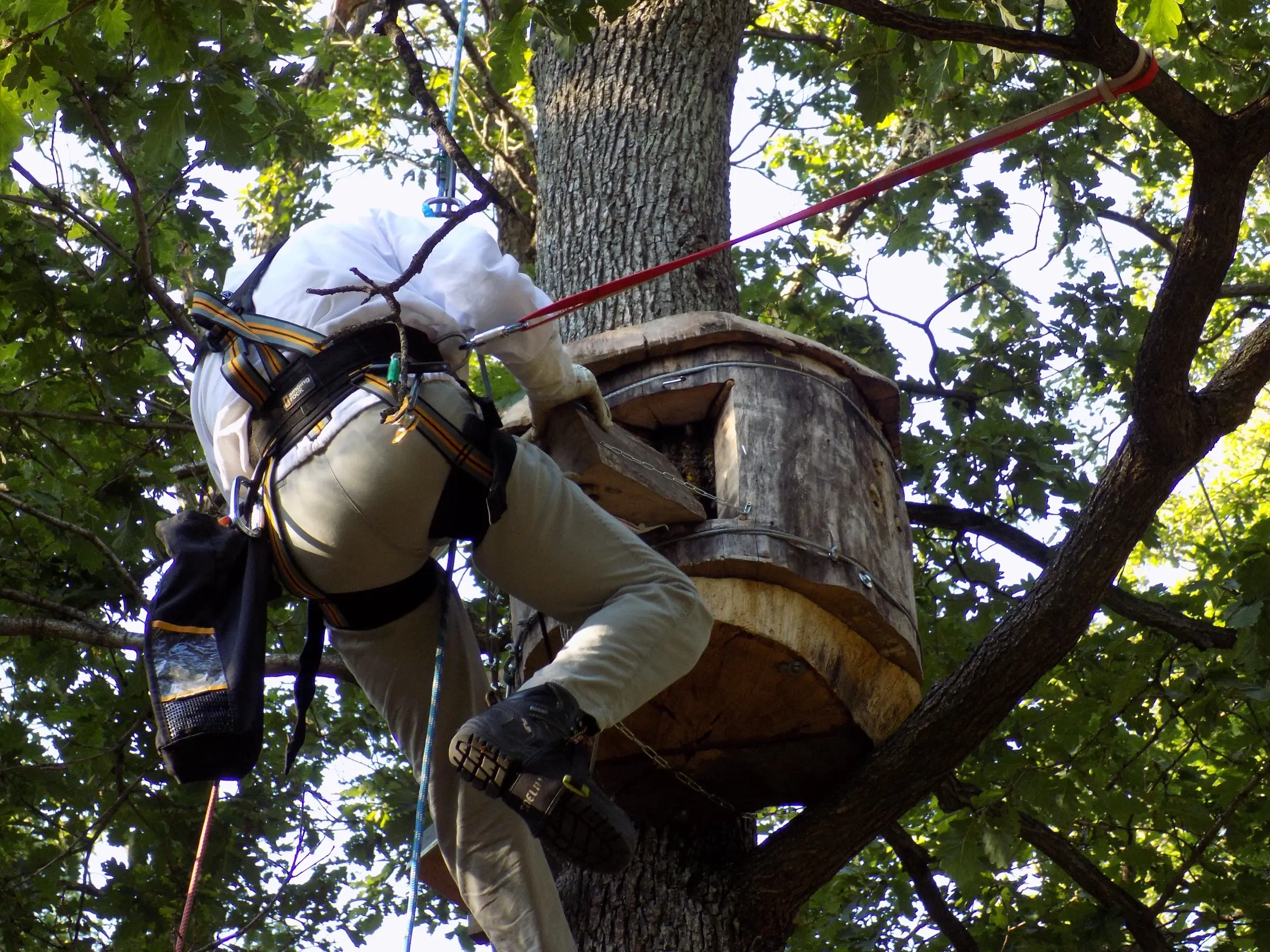
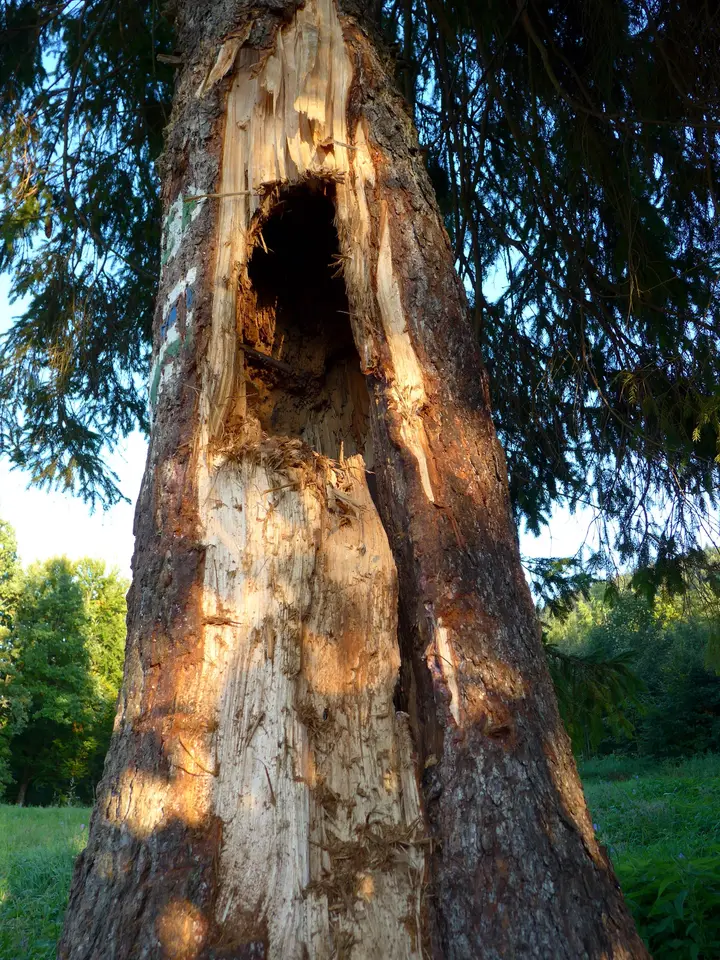
Bees often choose hollows high up in the trunk. To reach them we use the tree-climbing techniques of arborists, adapted for working at hollows. We renew our work-at-height certification every year.
We do not damage the tree – we climb on a rope, without spikes, and only observe the hollow.
A look inside without intervention
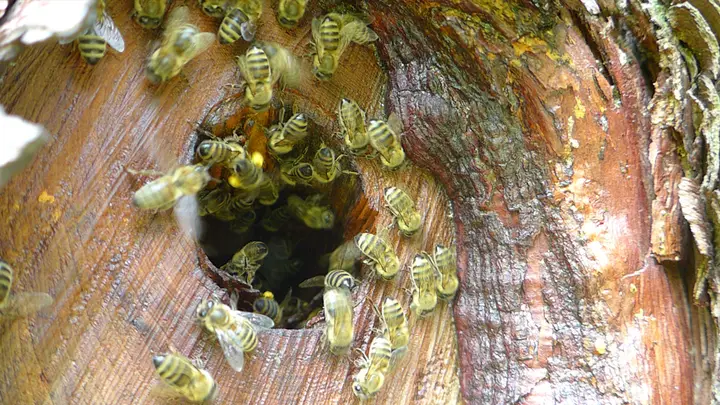
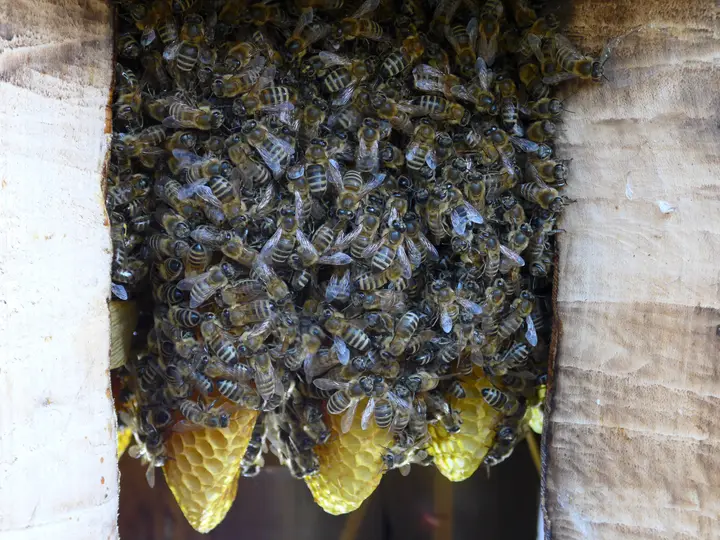
For every hollow we record the tree species, its diameter at a height of 130 cm, and the height, size and compass orientation of the entrance. We take photos and videos and sometimes look inside with an endoscope – without disturbing the colony more than necessary.
We record exact coordinates for research purposes only. We never publish the locations, to protect both the colonies and the old trees.
Two visits a year
We visit every hollow at least twice: in late summer or autumn, and then in March or April to find out whether the colony has survived the winter. We keep visiting the sites even after a failed winter – more than half of the hollows are taken over by a new swarm every year.
What genetics reveals
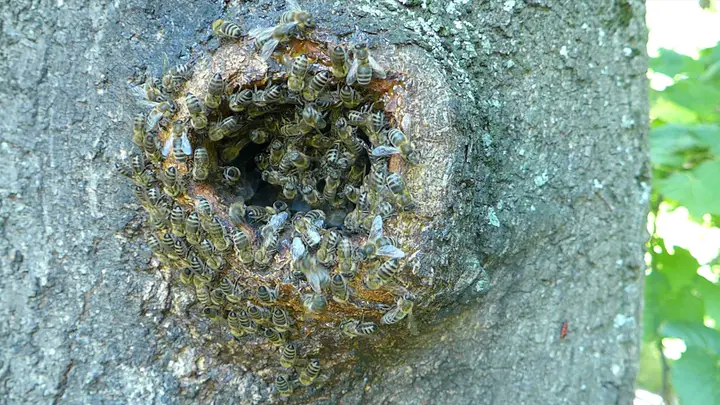
Since 2019 we have been taking a sample of two worker bees from most of the colonies. Genetic results from 52 colonies across Slovakia have provided the most extensive overview so far of the genetic diversity of free-living honey bee colonies in the country.
Together with the University of Hohenheim in Germany, we are now preparing an analysis of further samples from our archive.
Key findings
- Most of the free-living colonies we monitor live in parks and cemeteries, not in the forest – where old trees with hollows grow. Most often in linden trees, plane trees and ashes.
- Hollows are used again and again. More than half are reoccupied every year – old combs and the scent of propolis attract new swarms.
- Survival in the forest is extremely hard. In eight seasons of the experiment in the Tribeč mountains, not a single colony survived the winter. We are testing whether a lack of pollen and nectar is the cause.
- Data from Slovakia helped change the status of the species. They contributed to the IUCN assessment that moved free-living honey bee colonies in the EU from "data deficient" to "endangered".
From three colonies to 158 hollows
- 2017The first three documented colonies. An internship at the Institute of Apiculture in Liptovský Hrádok and the first contacts with arborists.
- 201815 monitored hollows. Start of the experiment in the Tribeč mountains.
- 2019Start of sampling for genetic analysis; swarm traps in forests.
- 2023Cooperation with the international Honey Bee Watch coalition; sharing data from Slovakia.
- 2024Preparing a research project at the Slovak University of Agriculture in Nitra, supervised by Assoc. Prof. Róbert Chlebo – the coexistence of free-living and managed honey bee colonies.
- 2025Reassessment of the status on the IUCN Red List. New swarm traps at forest edges.
- 2026158 monitored hollows, 110 occupied. Cooperation with the University of Hohenheim. The Prírodné včely association is founded.
Scientific outputs
- A review article in a peer-reviewed scientific journal (Current Contents) – an overview of current knowledge (2026)
- A review article in a peer-reviewed scientific journal - Persistence of Free-living and Managed Honey Bee Colonies at Paired Sites in Slovakia: An Exploratory Case Study (2026)
- Articles in Slovak and Czech beekeeping magazines (Včelár, Moderní včelař, Dymák, eNewsletter of the Institute of Apiculture)
- Posters at international scientific and beekeeping conferences (EurBee 2024, Apimondia 2025)
- Talks at academic conferences in Slovakia and the Czech Republic (2025, 2026)
- Co-author of the background data for the assessment of Apis mellifera on the IUCN Red List
We work with: the Slovak University of Agriculture in Nitra, the Institute of Apiculture in Liptovský Hrádok, the University of Veterinary Medicine and Pharmacy in Košice, Honey Bee Watch, Universität Hohenheim, Lesy SR (Tribeč branch), and arborists and foresters from all over Slovakia.
We are looking for collaborators
If you are a researcher, forester, arborist or conservationist and are interested in our data or methods, get in touch. We are happy to share our experience and welcome tips on new hollows.
Contact usHelp us uncover the hidden lives of bees.
Research on free-living honey bee colonies takes time, fieldwork and expert analyses. If you find this work worthwhile, you can help it continue. We also welcome expert, material or organisational cooperation.
- trips to check hollows all over Slovakia
- climbing equipment and its regular inspections
- genetic and laboratory analyses of samples