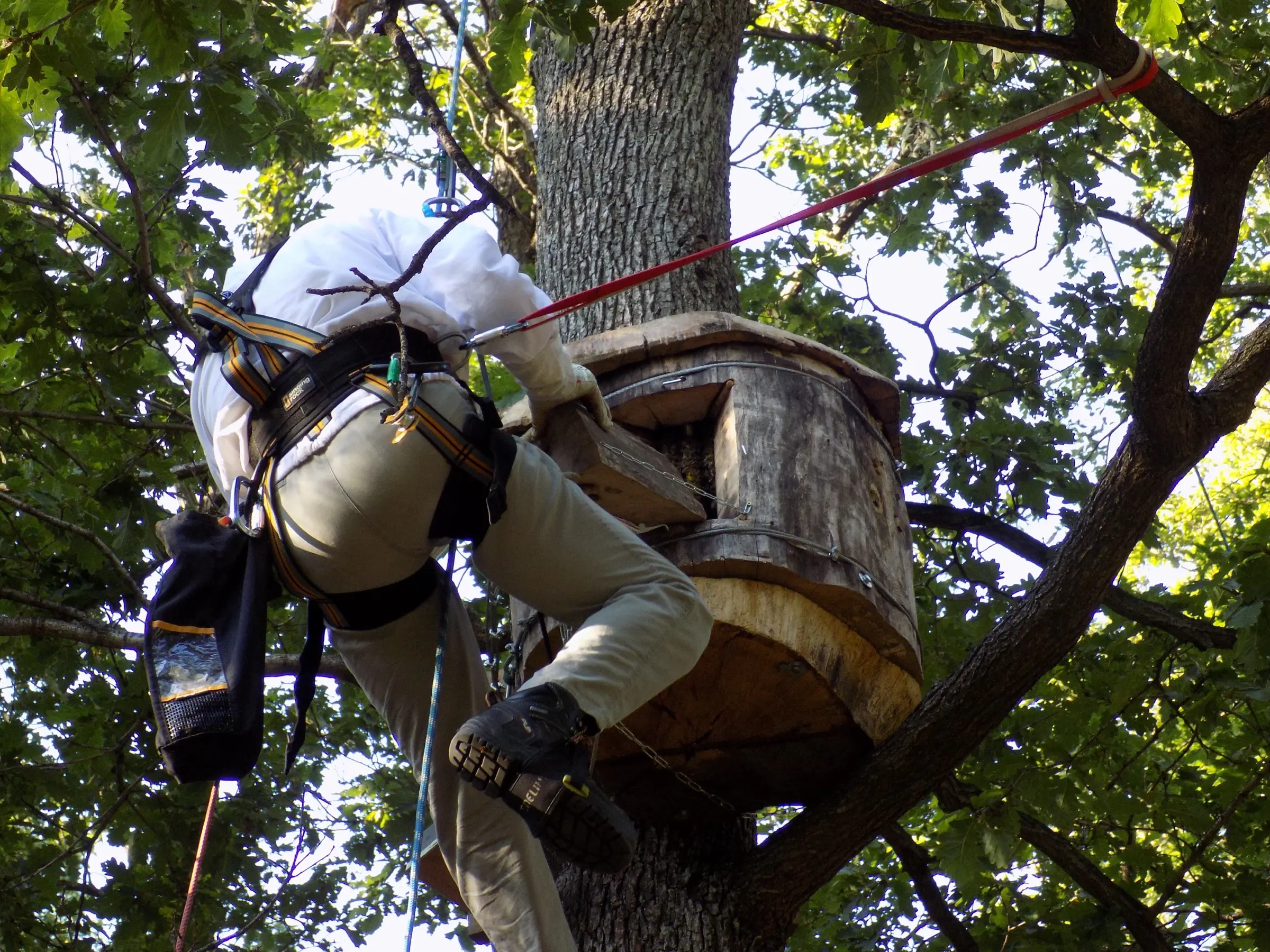
Up into the treetops after bees
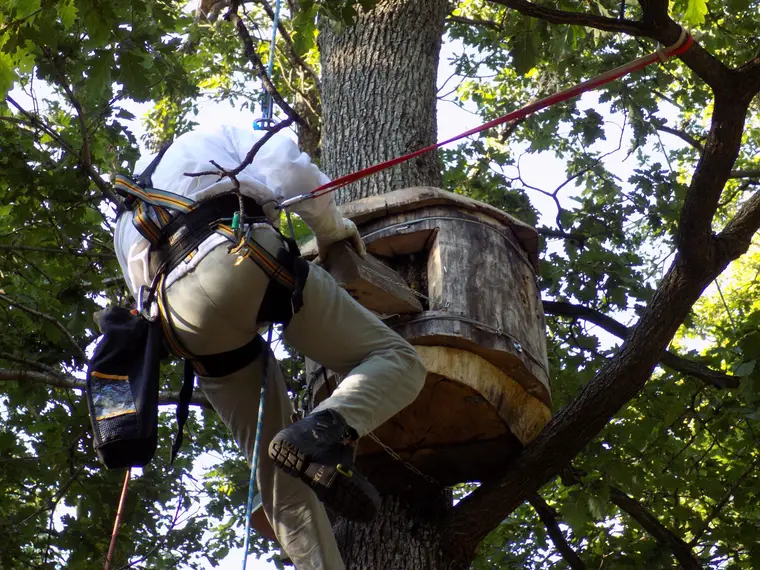
Hollows with bees can be tens of metres above the ground. How we get to them and what we record when we do.
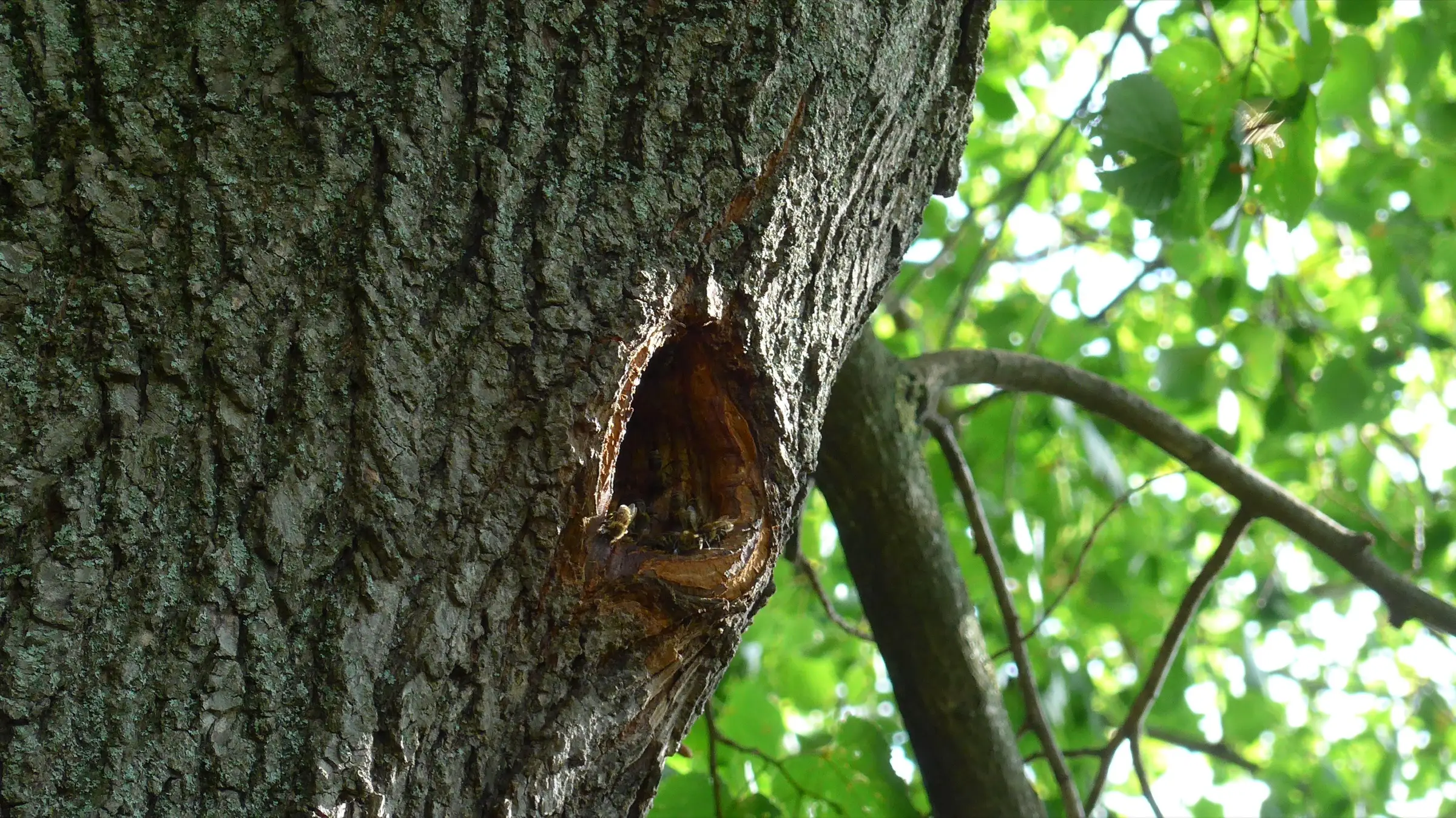
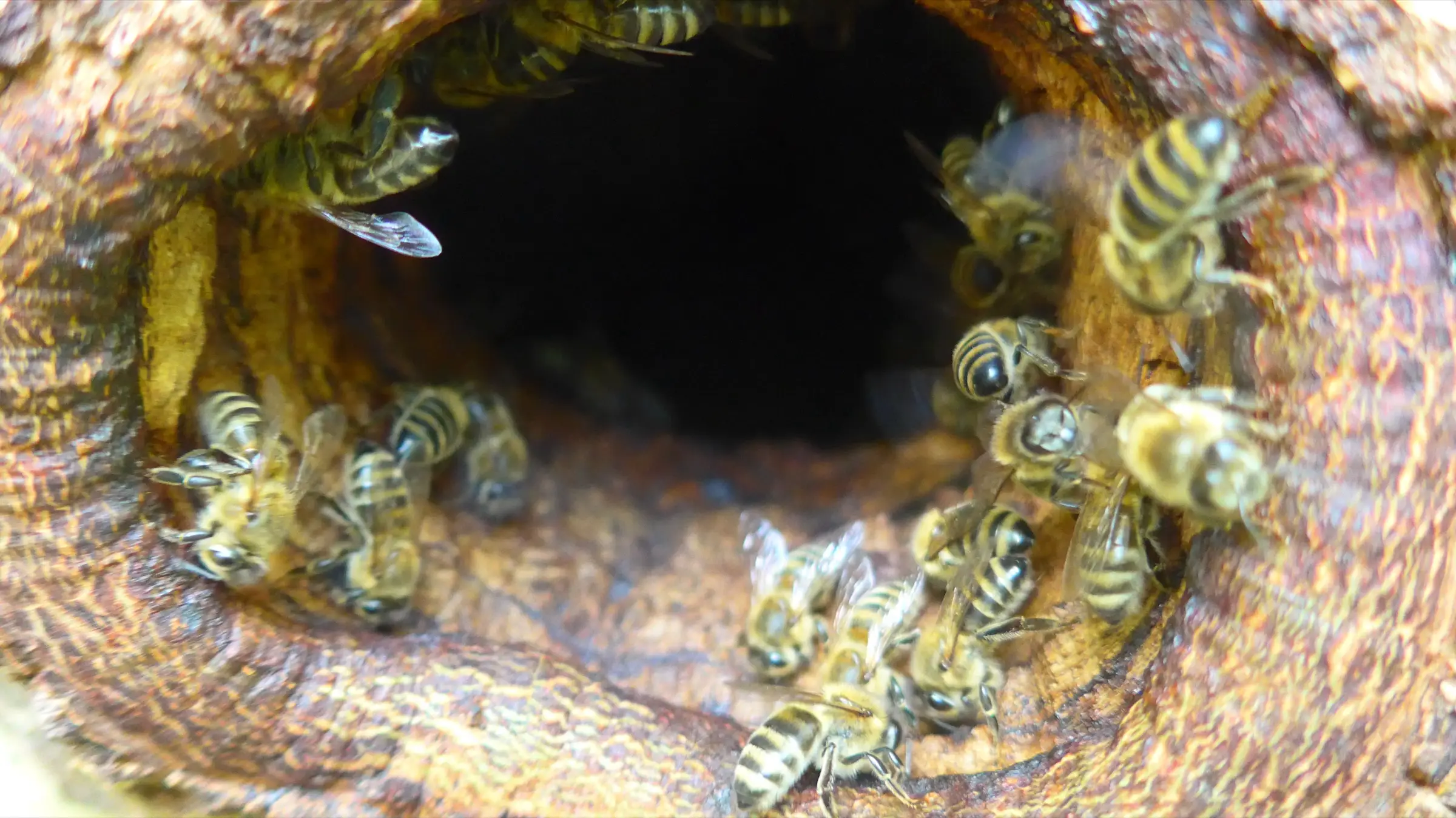
Bees often choose hollows high up in the trunk, where they are safe from predators and from the cold rising from the ground. If we want to see what is going on inside, we have to go up after them.
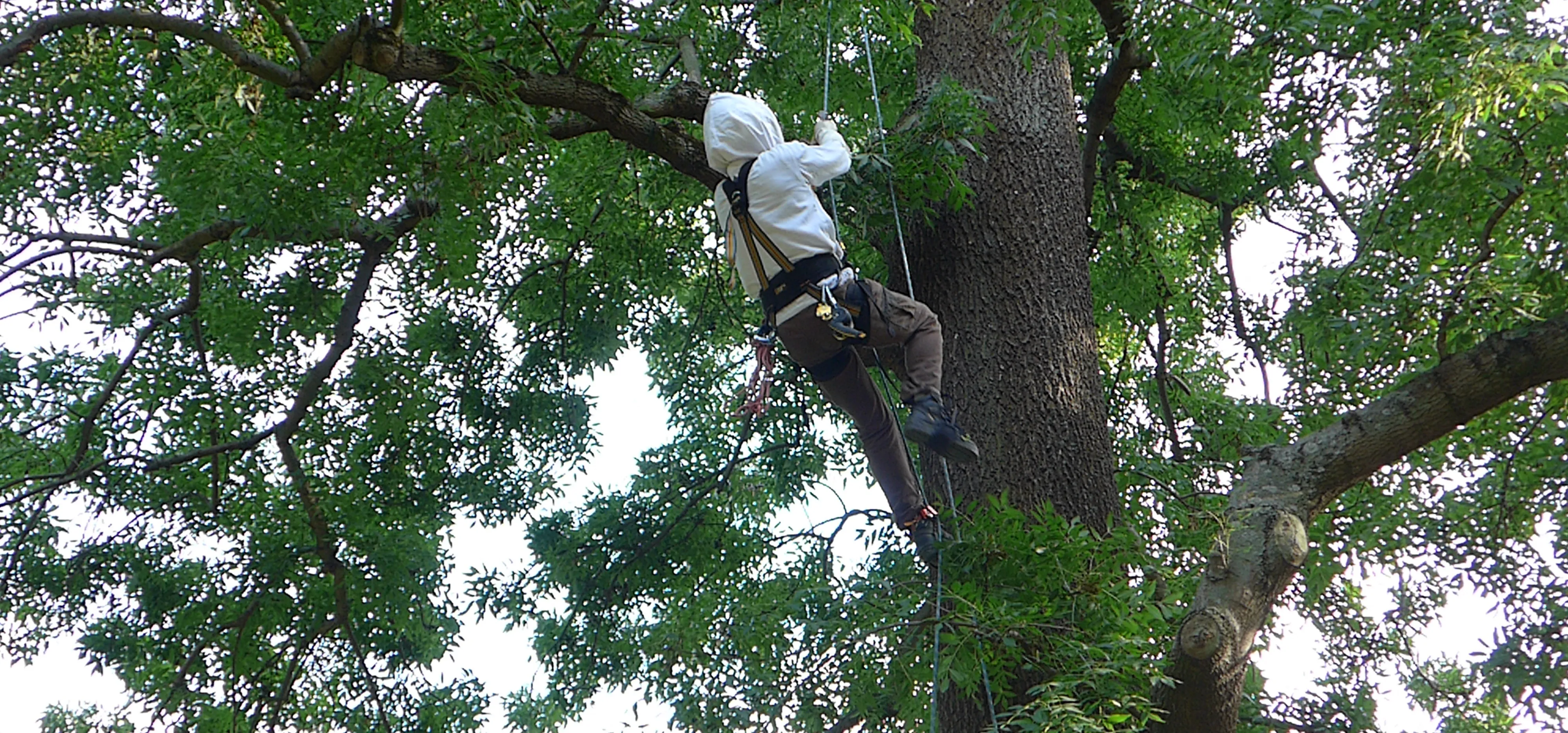
At the start of the research, an arborist helped us choose our tree-climbing gear and take our first steps. This was followed by an official course in working at height and a technique we adapted for working at hollows. We renew the certification every year – safety comes first in this work.
What we record at every hollow
We document every find in the same way so that the data can be compared across the years:
- the tree species and its diameter at a height of 130 cm,
- the height of the hollow entrance above the ground,
- the size of the entrance and its compass orientation,
- photos and video.
Since 2019, wherever possible, we have also been collecting two worker bees from each colony for genetic analysis.
We visit every hollow at least twice a year – in late summer or autumn, and then after the winter, in March or April, when we find out whether the colony has survived. We record the exact coordinates, but we never publish them.