A bear at the hollow
A brown bear can sense a colony inside a tree. We have documented its successful and unsuccessful attempts to get to the combs several times.
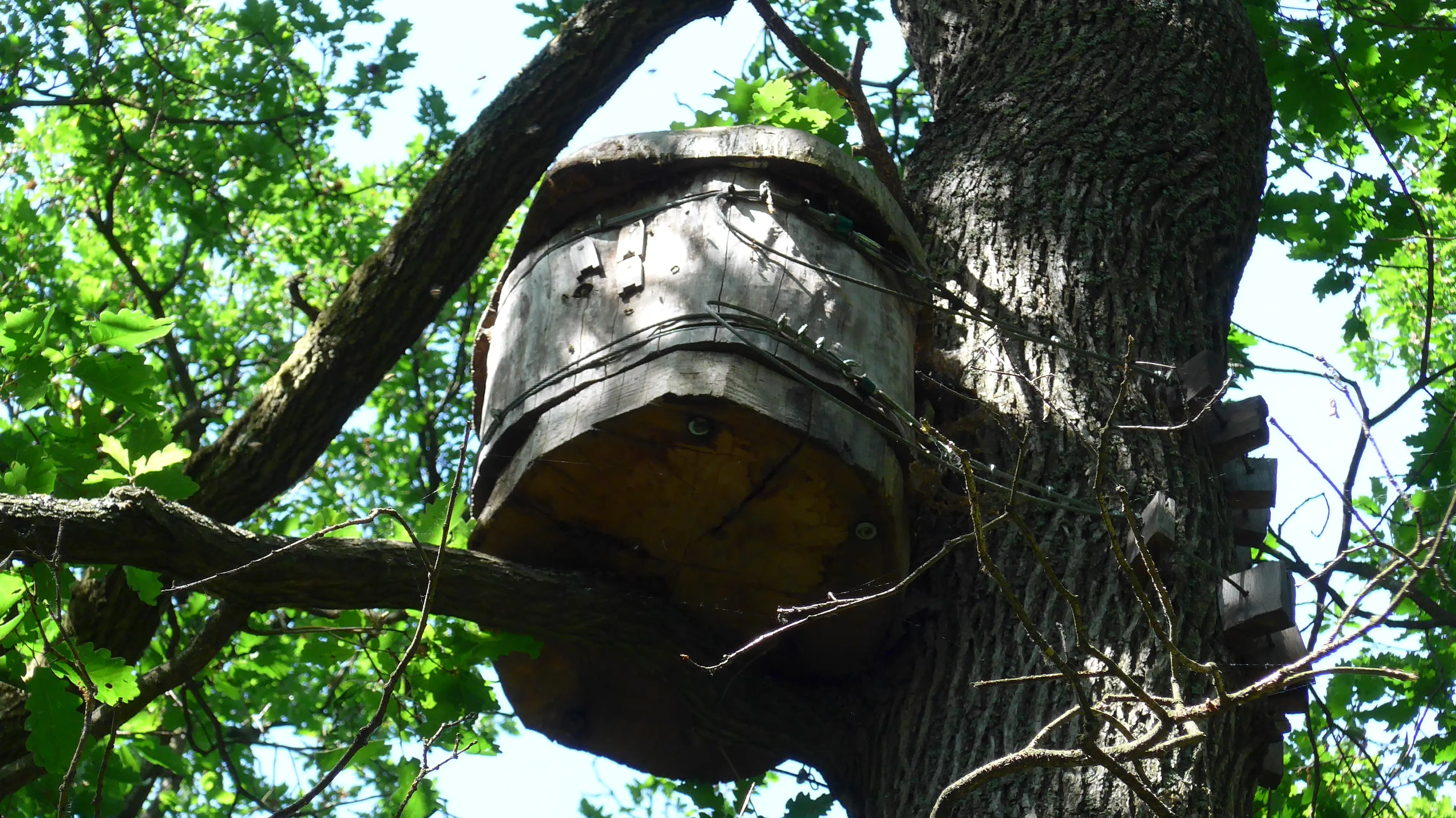
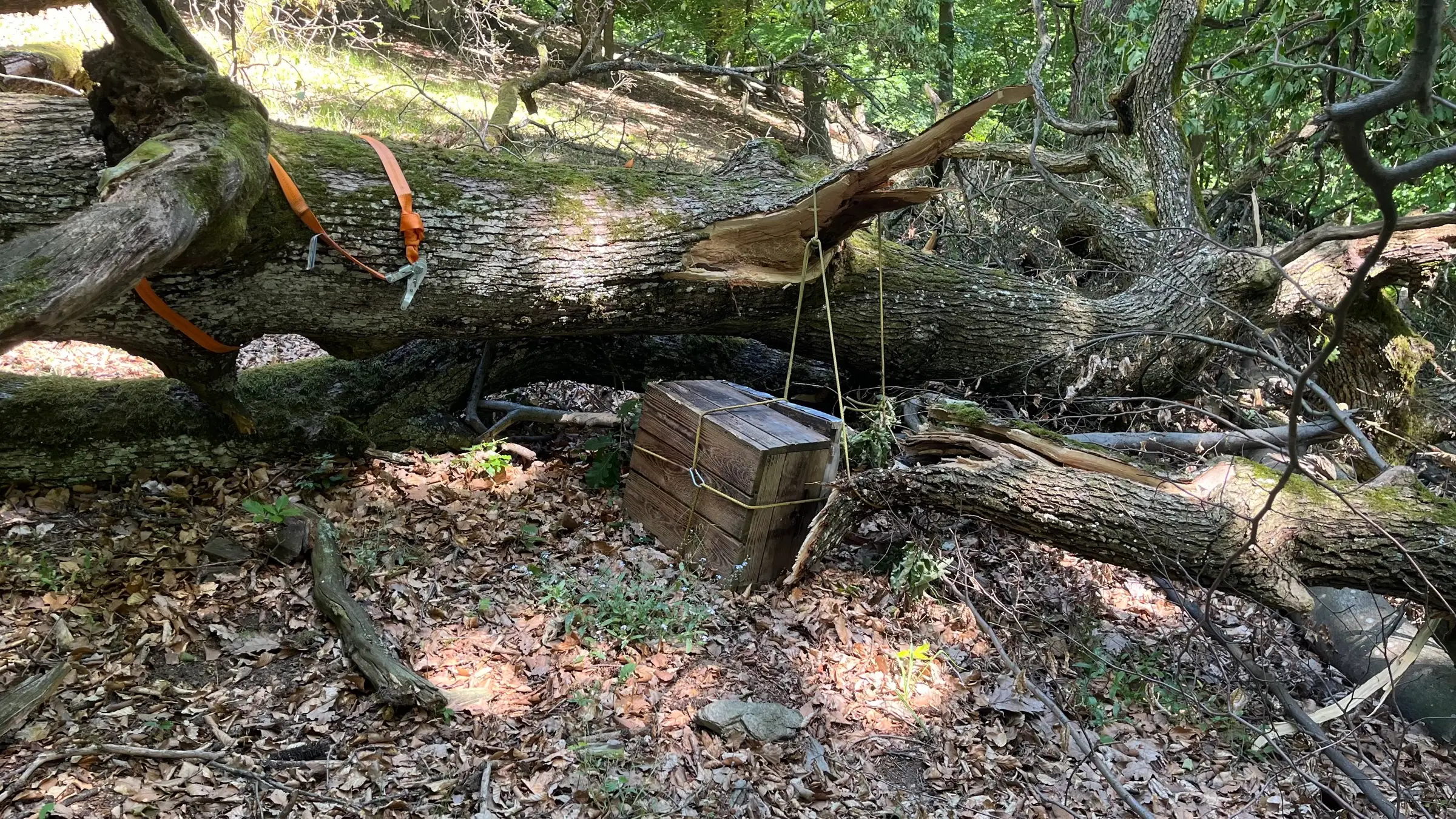
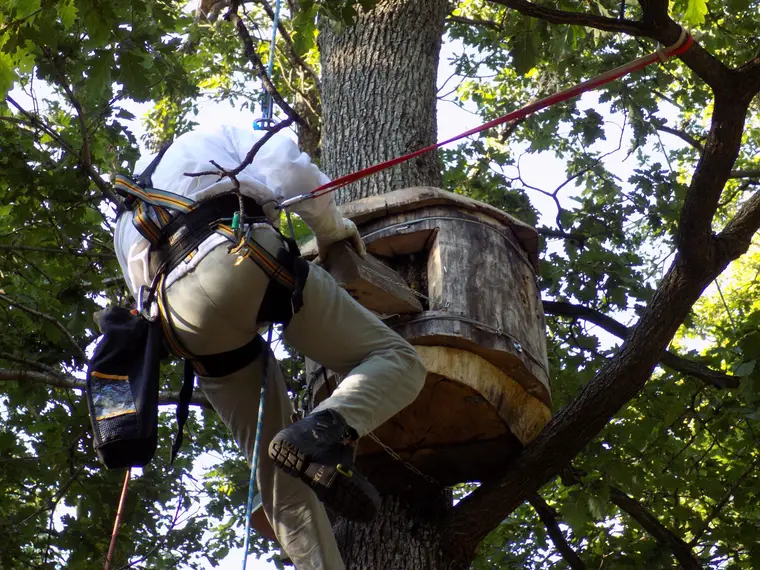
We started our first observations of free-living honey bee colonies in the forests. Tips come to us from foresters, conservationists and other friends of bees from all over Slovakia. And in the forests we have repeatedly met another bee enthusiast – the brown bear.
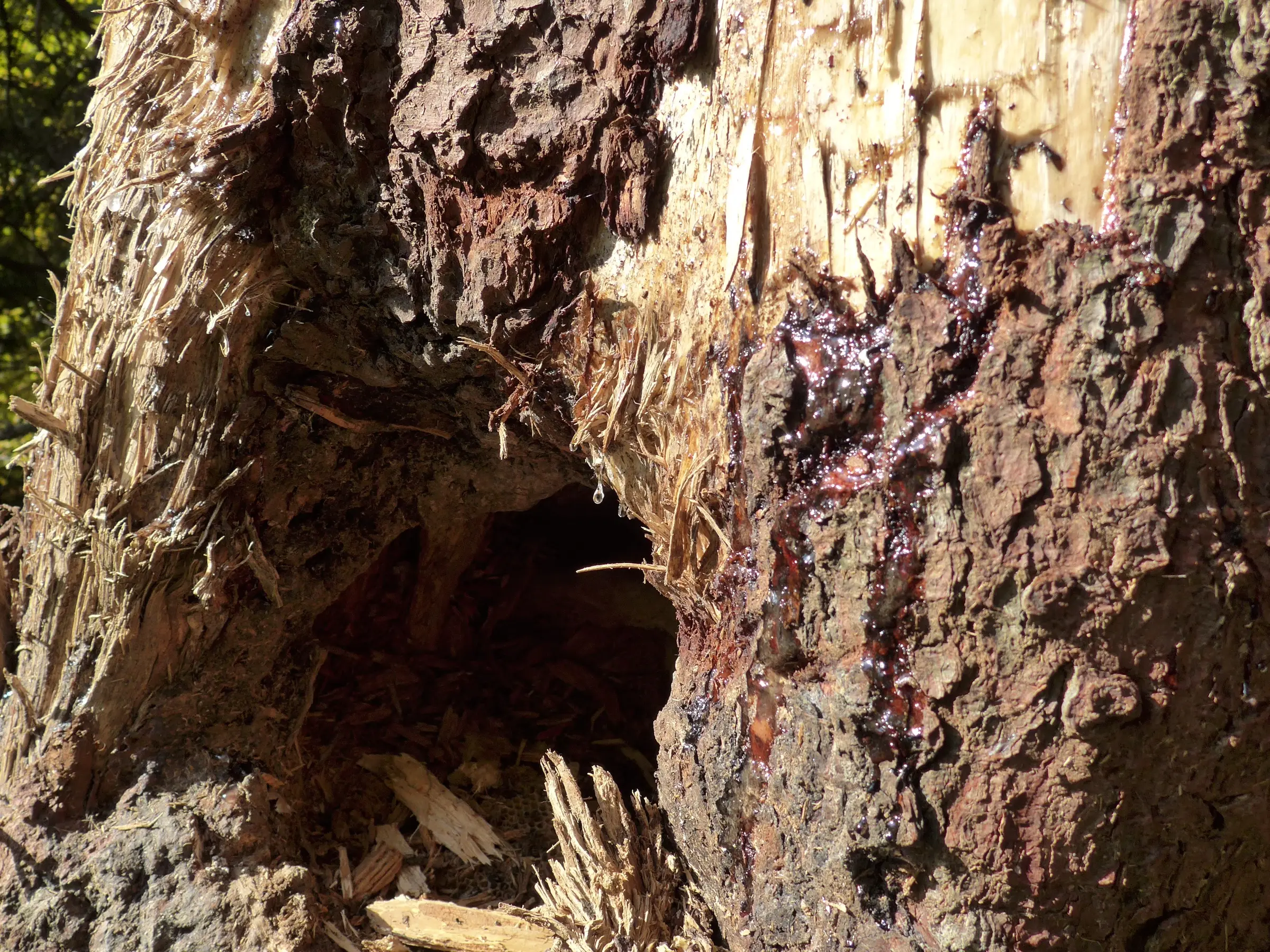
A bear can smell honey and brood comb even through a thick layer of wood. It can climb up to the hollow, rip open its edges and gradually chew its way inside. Most of the time – but not always – it succeeds and destroys the hollow with its colony.
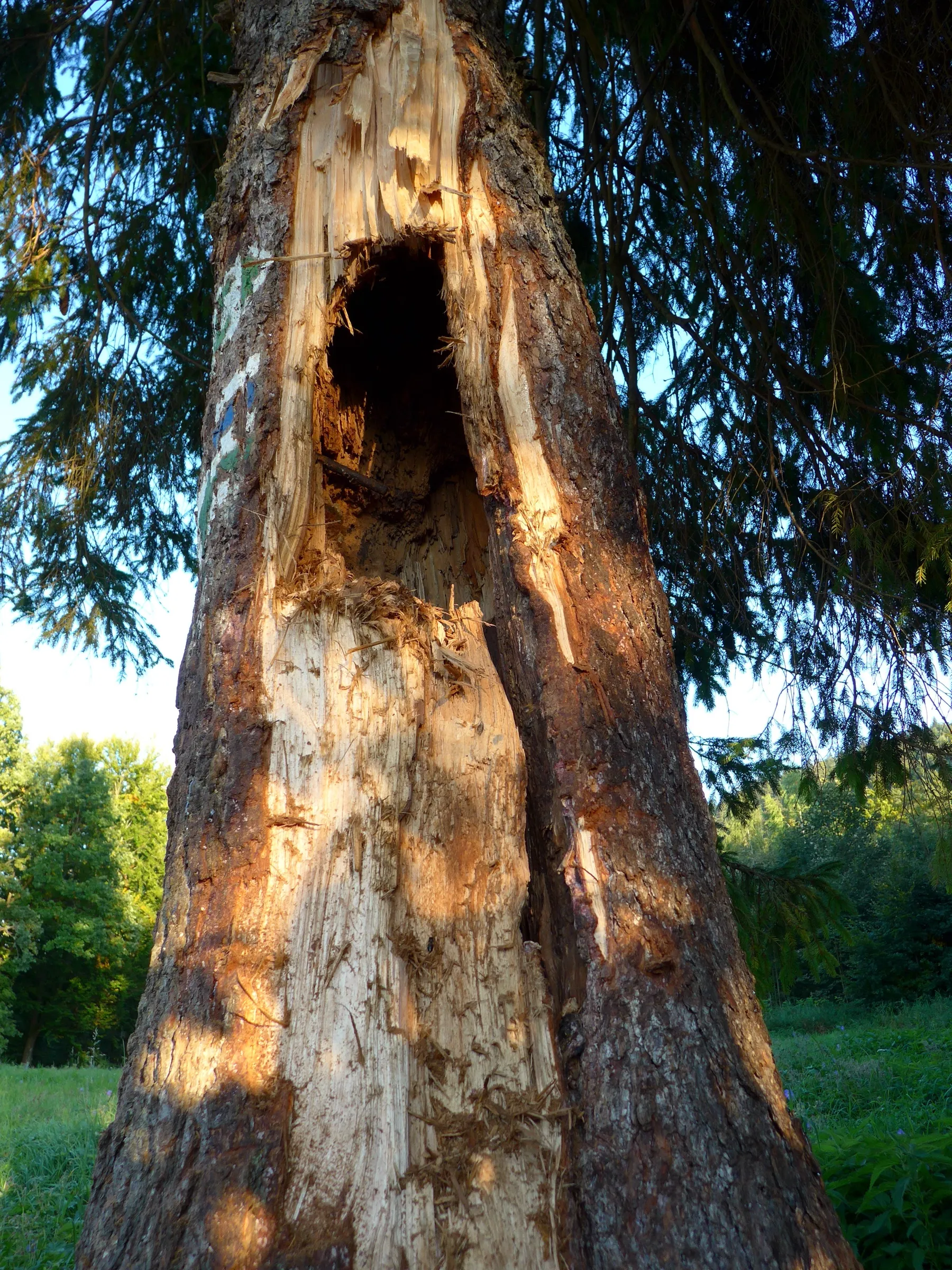
Not every attempt succeeds
We have also recorded cases where the bear left empty-handed. Solid wood or a too-narrow entrance stopped it, and the colony survived. During our checks we then find the marks on the trunk as evidence of its visit.
For us it is a reminder that free-living honey bee colonies are part of the forest ecosystem with everything that comes with it – including predators that lived alongside them for thousands of years before people began keeping them in hives.