Log hives eight metres up
Since 2018 we have been watching whether free-living honey bee colonies can survive in the forest of the Tribeč mountains. So far the forest is giving us a clear, yet surprising answer.
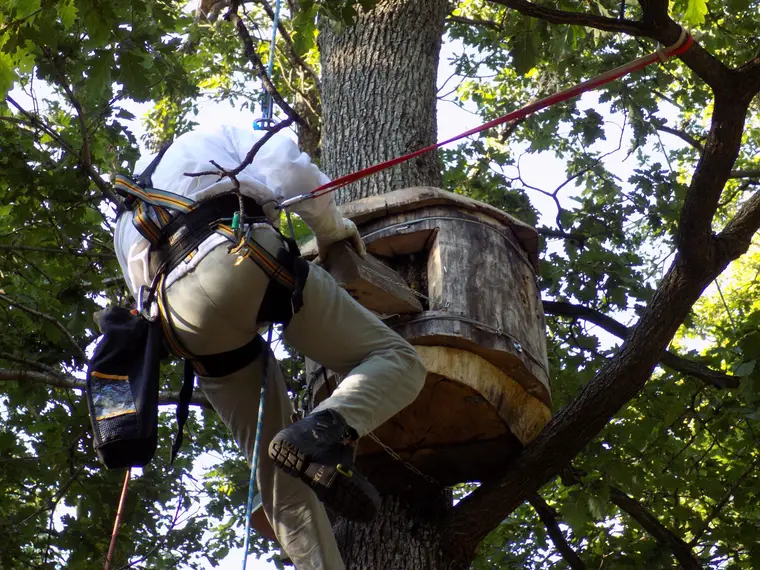
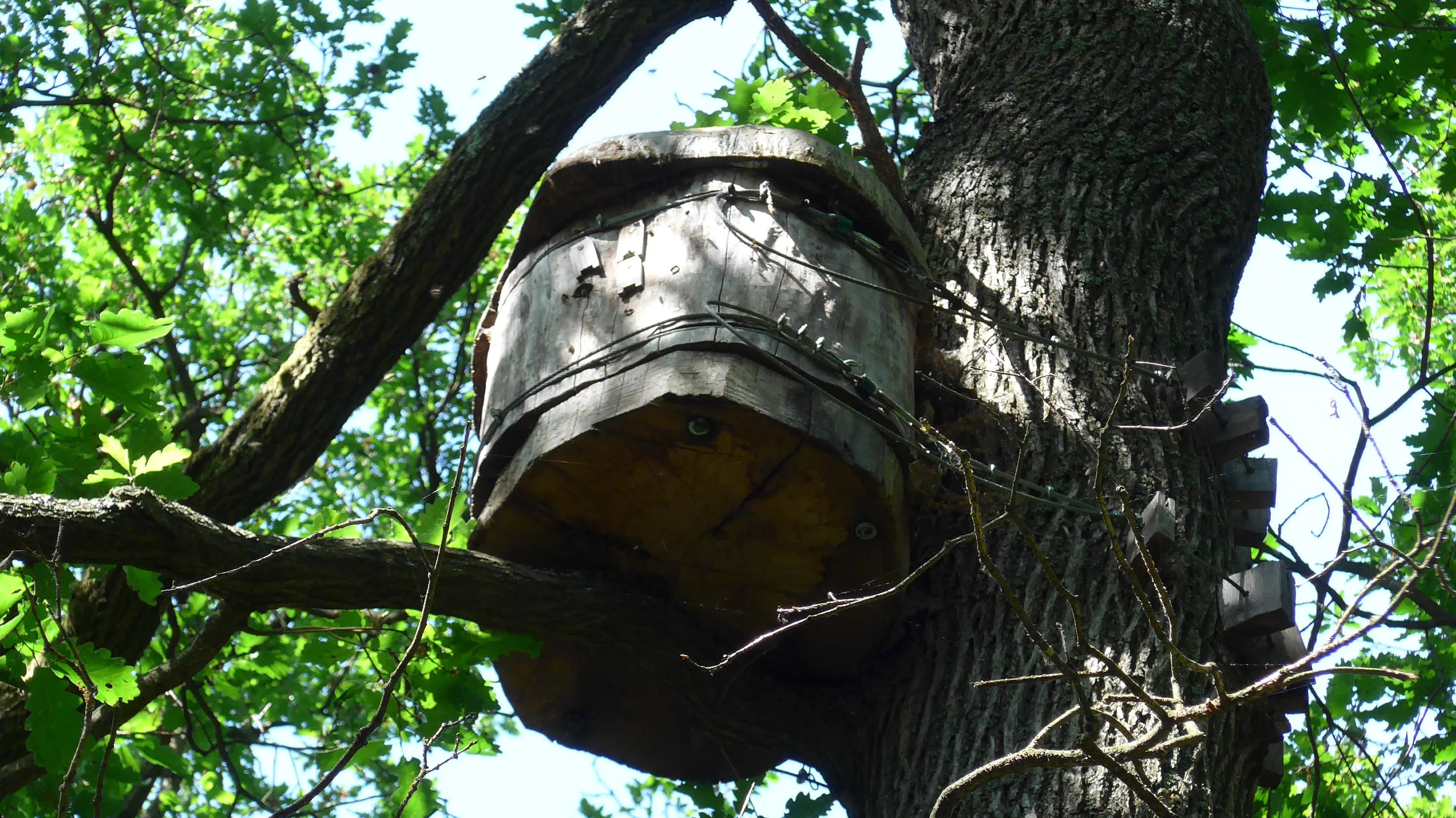
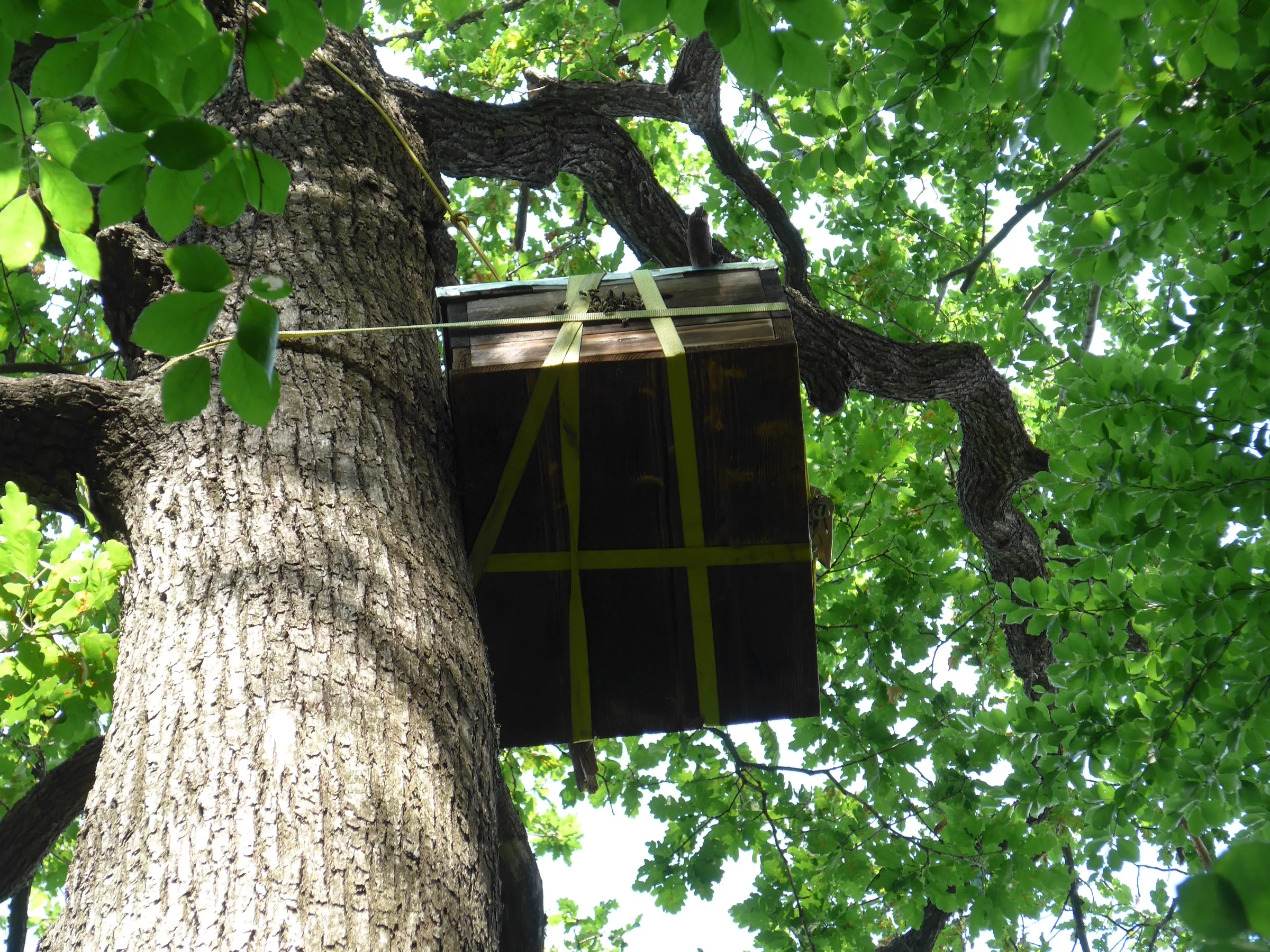
The original idea was simple: bring bees back to the forests. Foresters and forest workers had told us that there were fewer and fewer of them. So in 2018 we hung log hives – traditional hives hollowed out of a tree trunk – on trees at two sites in the Tribeč mountains and put colonies in them.
Both colonies died within a short time. A year later we added three more sites, and this time we fed the new colonies with honey. By autumn three of the five were left. Not one of them survived the winter.
From experiment to observation
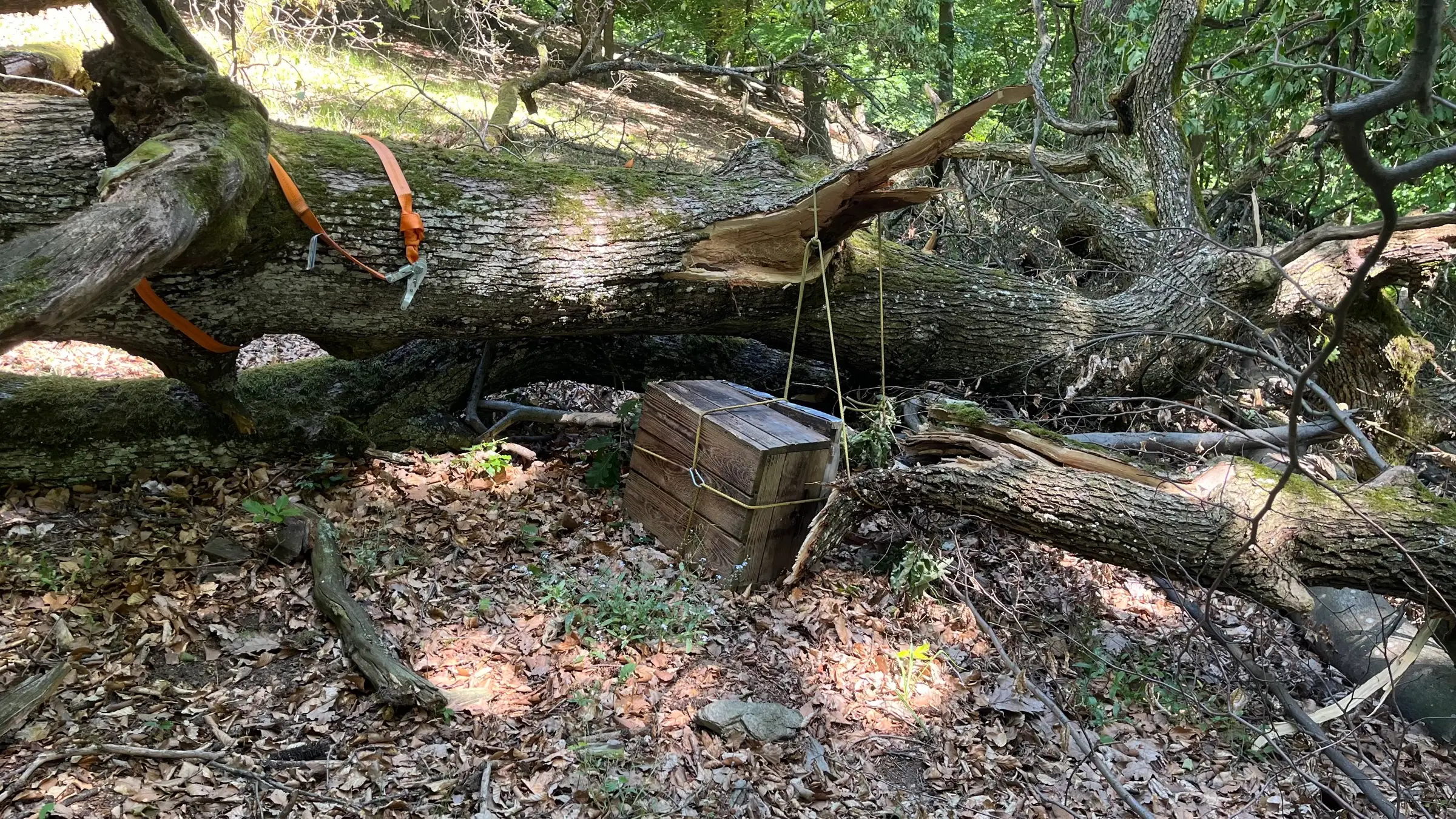
That is when we changed our approach. We put up ten swarm traps – hives designed to attract swarms – in the forests, and the experiment turned into pure observation. We no longer bring colonies into the forest; we only watch how many sites swarms occupy on their own and how many months they last there.
Getting the log hives eight metres up into the trees was a logistical challenge. It took two seasons, but they still serve their purpose today. There are now five log hives and thirteen swarm traps in the forest.
In seven seasons of observation, not a single colony has survived the winter in the forest.
Hunger deep in the forest
Why? Our hypothesis is that the forest lacks enough pollen and nectar. To test it, in 2025 we placed three swarm traps at the edge of the forest, closer to more varied forage.
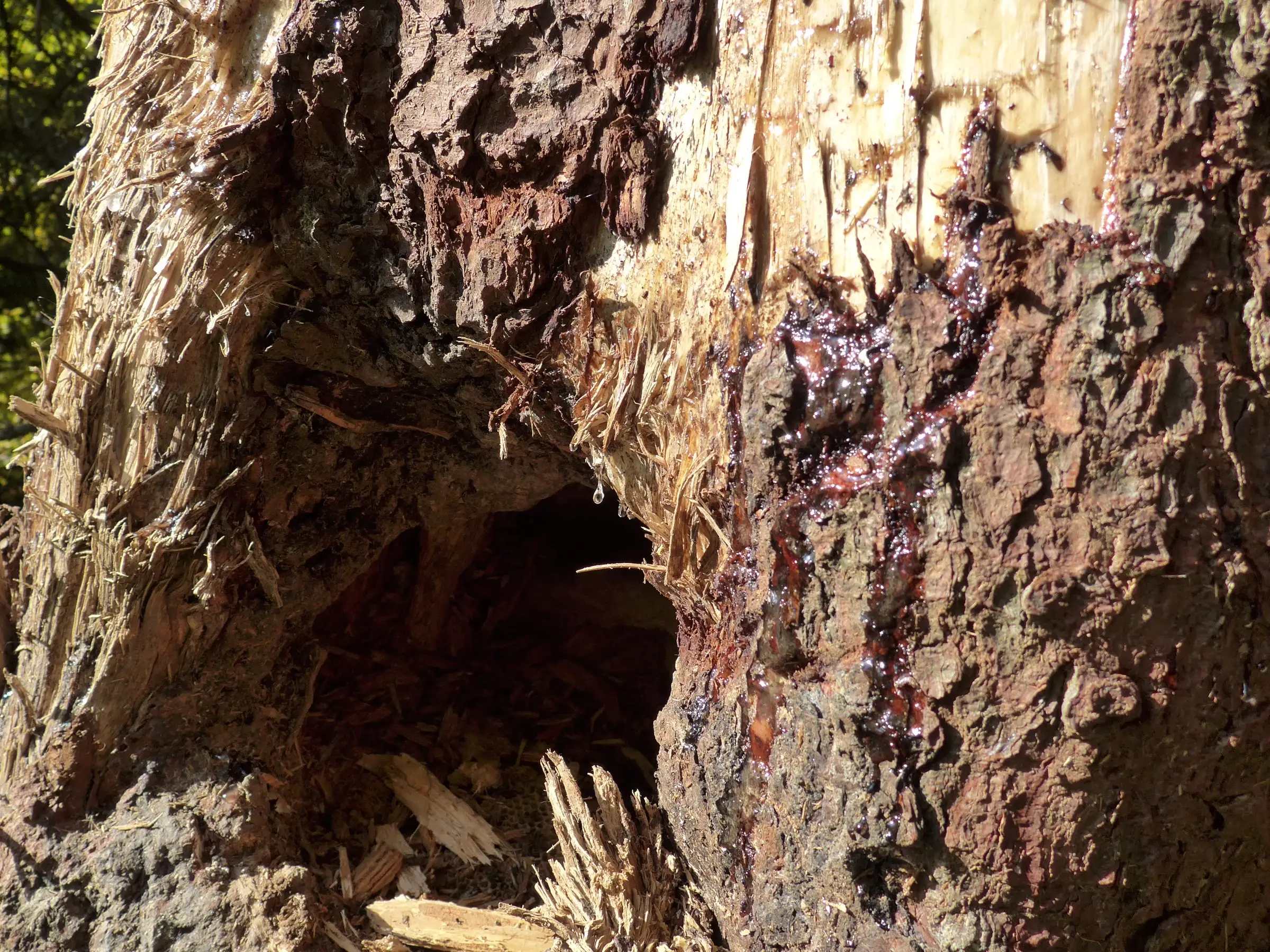
In the first year only one of them was occupied. The colony stayed active and vigorous until late autumn – and yet it did not live to see the spring. It starved. This year all three were occupied. One swarm stayed outside and built its combs on the underside of the swarm trap; its fate is sealed. During the autumn the colony in another of these forest-edge traps died, so only one is going into the winter. We will be waiting anxiously for the spring to see whether it survives.